
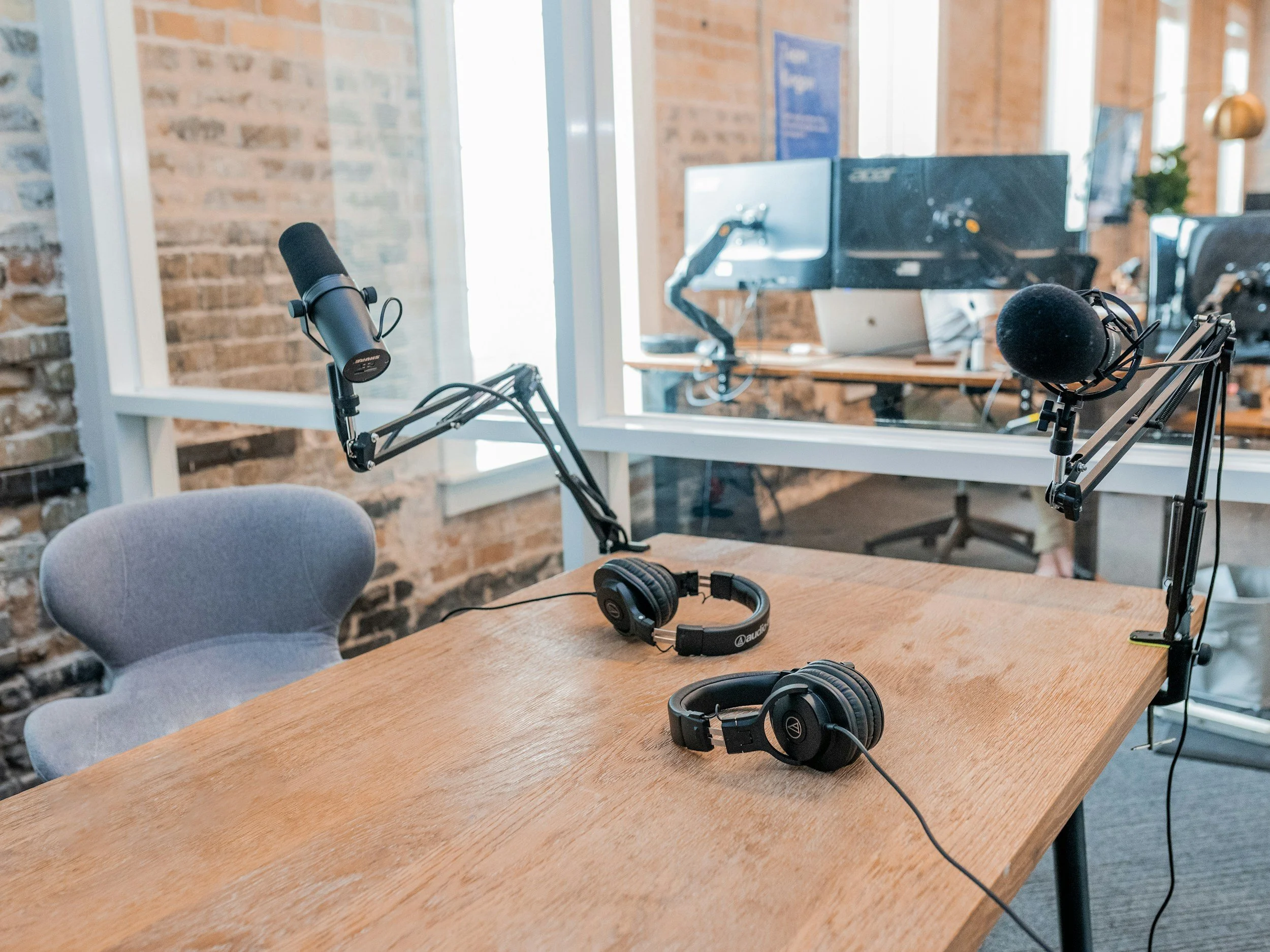
Podcasts
Most brand podcasts don't survive their first season
The pattern is always the same. Someone buys the mics. Two executives interview each other about industry trends. Episode four takes six weeks to publish. Episode nine never arrives, and the mics end up in a drawer next to the branded fidget spinners.
Podcasting with Purpose
The first podcast I produced nearly 20 years ago was designed to promote my brand as a video producer serving the pro photography industry. It was called “F Stop Beyond,” and it was pegged as “Fresh Air” for photographers. It went on to become the #3 arts podcast on Podbean.
Ever since, every time I’ve donned the podcast earphones or sat in front of a mic, it was to fulfill a greater brand purpose—for either myself or my client.
Radio Film School was affectionately referred to as “This American Life” for filmmakers. It was an audio documentary series that I scored, scripted, and sound-designed. The leading filmmaking blog, No Film School, called it “the filmmakers podcast we’ve all been waiting for,” and it hit #1 in the iTunes Visual Arts category.
For Wistia, I produced A Better Workplace, part of their ever-evolving portfolio of creative shows. This podcast focused on how organizations can build positive, inspiring, and fulfilling workplace cultures. As producer, I recruited guests, wrote intros and outros, helped determine topics, and monitored the recordings.
For Pro Video Coalition, I hosted and produced the reboot of Crossing the 180, “the filmmakers podcast that breaks the rules.” It was an interview series with directors, editors, and Hollywood executives who worked on shows like “Star Wars: Visions,” “Mare of Easttown,” and “In the Heights.”
What all of these shows had in common, whether or not they were interview-based, was an aspect of storytelling that connected with its audience and helped build brand affinity. I know the difference between recording a conversation and producing a show.
What we build and how it runs
Ron takes the role of you managing editor. I own the calendar, the briefs, the line edit, and the quality bar. You get a publication instead of a posting habit.
-
Format, premise, host, title, and the honest answer to whether anyone would listen to this if they didn't work at your company.
-
Research, guest sourcing and correspondence, prep documents, and the question development that makes an interview go somewhere unexpected.
-
Anything from a tight interview cold open to a fully scripted narrative audio documentary. Scripted audio is rare in B2B, which is precisely why it stands out.
-
Editing, audio sweetening, sound design, and scoring. Your show should sound like it belongs on a network.
-
Setup, publishing cadence, video edition, clip strategy, and the surrounding content that keeps an episode alive past its release day.